Physical Address
304 North Cardinal St.
Dorchester Center, MA 02124
Physical Address
304 North Cardinal St.
Dorchester Center, MA 02124

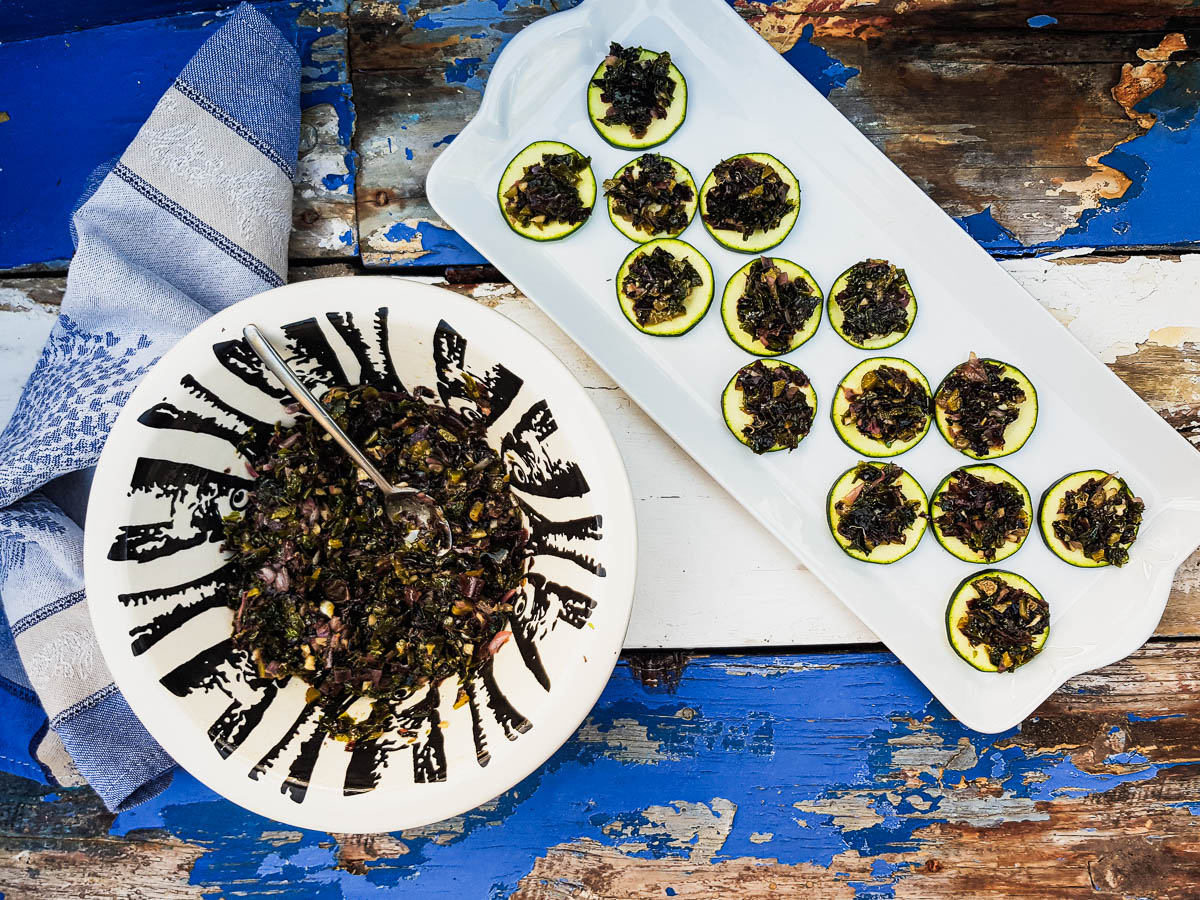
A seaweed tartare is a very easy aperitif recipe to make and full of health benefits. Use a mixture of seaweed (sea lettuce, dulce, nori) dried or fresh.
I talk to you about nutritional contributions, explain how to choose your seaweed, fresh or dried, how to make and season your tartare and also how to serve it. My favorite way, on slices of cucumber or zucchini as in the photos.

They are low calories and contain vegetable proteins as well as numerous antioxidants, fiber, iodine, polyunsaturated fatty acids, omega 3, vitamins, minerals (iron, calcium magnesium, etc.)… Sea vegetables with very interesting nutritional benefits.
Algae also contains umami. You have undoubtedly already heard of this 5th flavor (which complements sweet, salty, bitter, sour). With the name coming from Japan, umami has a particular power over satiety helping to regulate food intake.

Ideally mix 2 to 3 varieties of seaweed to make your tartare, or buy a ready-made mixture.
Algae are classified into 3 categories according to their color: green algae, red algae and brown algae.
The most commonly used algae are:

You have several options. The two main fresh or dried seaweed. They also exist frozen, with salt or vinegar.
If you are by the sea, in Brittany for example, and you know where and how to harvest fresh seaweed from the seathat’s the ideal.
Please note, there are some precautions to take:
There are good practices for harvesting algae :

Another solution used here: dried seaweed that you will rehydrate.
You can find them in organic stores, for mail order sales on certain websites.
For my part, I buy them from a producer who sells them on the markets in Brittany. When I go to Perros-Guirec, I buy several glitter seaweed bags which are ready to use.
These dried seaweeds are sold by variety or the most often mixed. Mine is called iroise salad and is a mix of sea lettuce, dulce and nori.
All that’s left to do is rehydrate them either with a little lukewarm water or with one of the ingredients used in the recipe (olive oil, lemon juice, vinegar, etc.).
For a seaweed tartare, I make a mix with a ratio of 4 tablespoons of dried seaweed to 3 tablespoons of olive oil and a little water.

For my recipe I opt for quite strong seasonings to give character to the seaweed tartare: capers and gherkins, garlic and shallot, olive oil and a little water also to rehydrate the algae.
In addition I offer you a little balsamic vinegar (or cider vinegar) and of Dijon mustard (which you can replace with lemon juice).
If you wish, you can add these ingredients in half to start, taste and adjust according to your personal taste.
Treat yourself, the variations are endless :
Add spices (turmeric, curry, Espelette pepper, etc.), ginger fresh grated, diced dried tomatoes, candied lemon, sunflower seeds…
Look at the recipes that I offer you to see how to make the tartare and adapt according to your tastes or desires.

I would say a week in the refrigerator. There is a lot of oil which makes preservation easier.
As an aperitif tasted:
Seaweed tartare can also be used like a sort of condiment in a sandwichwith a mixture of raw vegetables or sprinkled on a mixed salad.
Finally you can suggest to accompany a dish like fish in foil or grilled in the oven.


A seaweed tartare is a very easy aperitif recipe to make and full of health benefits. Use a seaweed mixture (sea lettuce, dulce, nori). Recipe with dried seaweed and advice in notes for using fresh seaweed.
To prevent sleep
Depending on the dried algae you have, if they are in large sheets, cut them first with a knife to obtain small pieces which will be easier to spread and in the mouth (avoid the blender).
Start by rehydrating the algae flakes with olive oil and water. Leave the algae to soak for at least 30 minutes. The ideal is to do this step 1 to 2 hours in advance.
Slice the shallot and garlic. Cut the gherkins and capers into very small pieces.
Add the ingredients little by little, mixing as you go (possibly half the quantity indicated, taste and add according to your taste): balsamic vinegar (or cider vinegar), Dijon mustard (or lemon juice, shallot, garlic, gherkins, capers.
Check the seasoning, add pepper if necessary.
Source documents from Régine Quéva.
For lovers of fresh algae, I recommend a salad made with another product that looks like algae but is not algae, samphire.
Enjoy