Physical Address
304 North Cardinal St.
Dorchester Center, MA 02124
Physical Address
304 North Cardinal St.
Dorchester Center, MA 02124

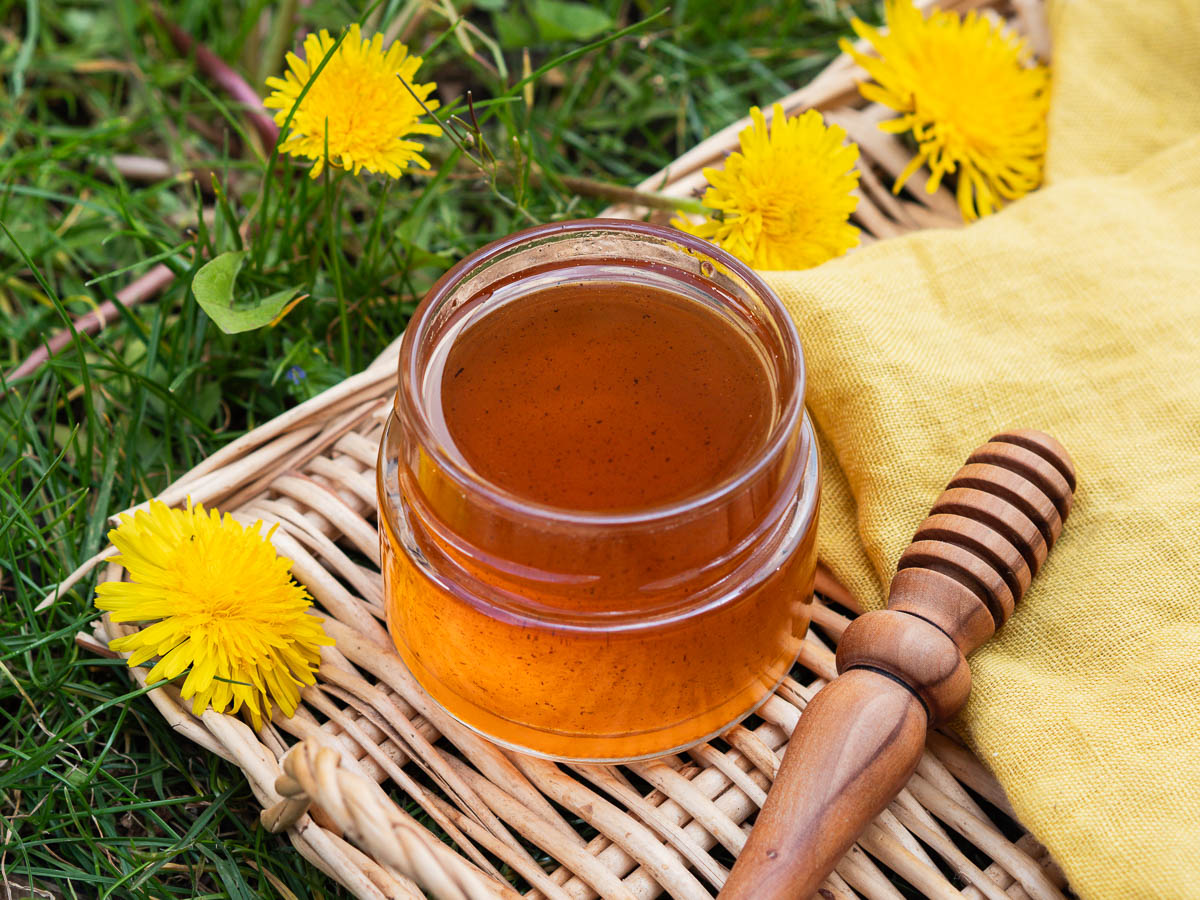
Pick some dandelion flowers and you can make this delicious homemade vegetable honey. Cheap and easy, it’s a great way to exploit nature’s treasures.
With the abundance of dandelions adorning our gardens and surrounding fields, why not explore the delights this plant can offer?
Dandelion flower honey is a true treasure of nature and a perfect alternative for people wishing to become more involved in a zero waste approach or aiming to reduce consumption, those looking to reduce costs in this period of inflation or simply take advantage of what nature can give us. A little old-fashioned recipe so in tune with the times. And a delight.

Of Franche-Comté origin, the word cramaillotte actually refers to dandelion and not this recipe. It means “little rack”. This nickname comes from the jagged edge of its leaves. The dandelion is also called lion’s tooth.
I saw two different spellings, with one or two ts, cramaillote or cramaillote. I chose the second, choosing the one used by the famous Gault&Millau.
Everything is good about dandelion. You can eat the leaves (in salads for example) as well as the buds (in pickles) or the flowers as here in honey.
But why call this preparation honey? Certainly because its liquid to semi-liquid texture and its light to golden color are really very close to that of honey, more than jam or jelly. For vegans, it is a perfect alternative to honey.
The manufacturing methodology, however, is closer to jelly because we cook and then only keep the recovered liquid which will become syrupy with the addition of sugar.
The taste is also quite close to a good mountain honey. Its delicate, slightly sweet flavor is enhanced with subtle floral notes characteristic of dandelion flower.
Dandelion honey, or cramaillotte, is therefore a really simple preparation accessible to everyone based on dandelion flowers, water, sugar and to add a little apple pectin and lemon juice.
Easy to make, and above all very economical when compared with honey, this recipe will allow you to discover all the subtlety of the flavors of dandelion. Read the preparation and cooking steps carefully beforehand to obtain quality honey with an intense flavor and optimal nutritional profile.
When picking, be sure to choose large, open flowers located away from potential sources of pollution and harvest them on a sunny day to ensure maximum nectar content. Avoid the edges of paths with people or animals, prefer your garden or meadows with little traffic. This is a very fun activity to do with children. You’ll see, they’ll love it.
We only need the flowers, so there is no need to cut the entire plant. Using your fingers, pinch the stem below the flower to cut it off. Choose the biggest ones. Depending on the recipes, the number varies a little from 300 to 400, or can be announced in weight which is really not easy to gauge when you are walking with a basket in hand. In my recipe, I suggest you pick 365 flowers, a very effective technical method, 1 flower per day of the year.
Before using the flowers, tap them gently to remove any insects. You can possibly rinse your dandelion flowers with water and a little white vinegar. In this case, rinse them well, pat them dry with a damp cloth then let them dry upside down on a dry cloth or absorbent paper. Then proceed quickly to the next step because you will not be able to completely dry them and if you wait too long, the quality of your flowers will deteriorate.

To prepare your dandelion honey, you will only keep the flower petals, eliminating the green parts which could add unwanted bitterness. It’s a bit long so do this in good company or while listening to music or your favorite podcast. Discard the green base of your flowers, ideally in your compost.

Cook the dandelion flowers with the water and the apples and lemons cut into large wedges. Above all, keep the skin and the seeds, they are what will provide pectin and will help to obtain a nice syrupy texture. If you want a citrus-free version, substitute with pectin. Rinse the apples and lemons beforehand, cut them into quarters or eighths and add them as is. Hence the interest in choosing them organic.

Cook then filter by passing through a Chinese or very fine sieve to collect the liquid. Squeeze well to recover as much as possible. Do this over a saucepan because it will cook again.

Add the sugar to the resulting liquid and cook. As with a jam, test the texture to verify that your dandelion is ready.
If it remains too liquid, you can add a little agar agar, boil for a minute, this will help. This is something I sometimes do for my homemade jams.
It’s over. Place in a previously sterilized pot or at least passed under boiling water. Close tightly.

Once ready, your it can be used in multiple ways. Include it in a vinaigrette to give a little pep or a sweet and sour side, spread it on toast for breakfast or snack, sweeten your yogurts with it, mix it in a refreshing smoothie, use it in your pastries or to spice up a fruit compote… In short, use it as you would with honey, agave syrup or coconut blossom syrup… or with sugar of course.


Dandelion has multiple medicinal properties. It has traditionally been used to treat a multitude of ailments, ranging from liver and biliary disorders to anemia, skin problems and rheumatism. But as in this preparation the dandelion flower is cooked for a long time, I cannot really tell you if these beautiful properties for our health are preserved in the cramaillotte.


Pick dandelion flowers and you can make this delicious homemade vegetable honey, prepared a bit like making fruit jelly. Cheap and easy, it’s a great way to exploit nature’s treasures.
To prevent sleep
Enjoy