Physical Address
304 North Cardinal St.
Dorchester Center, MA 02124
Physical Address
304 North Cardinal St.
Dorchester Center, MA 02124

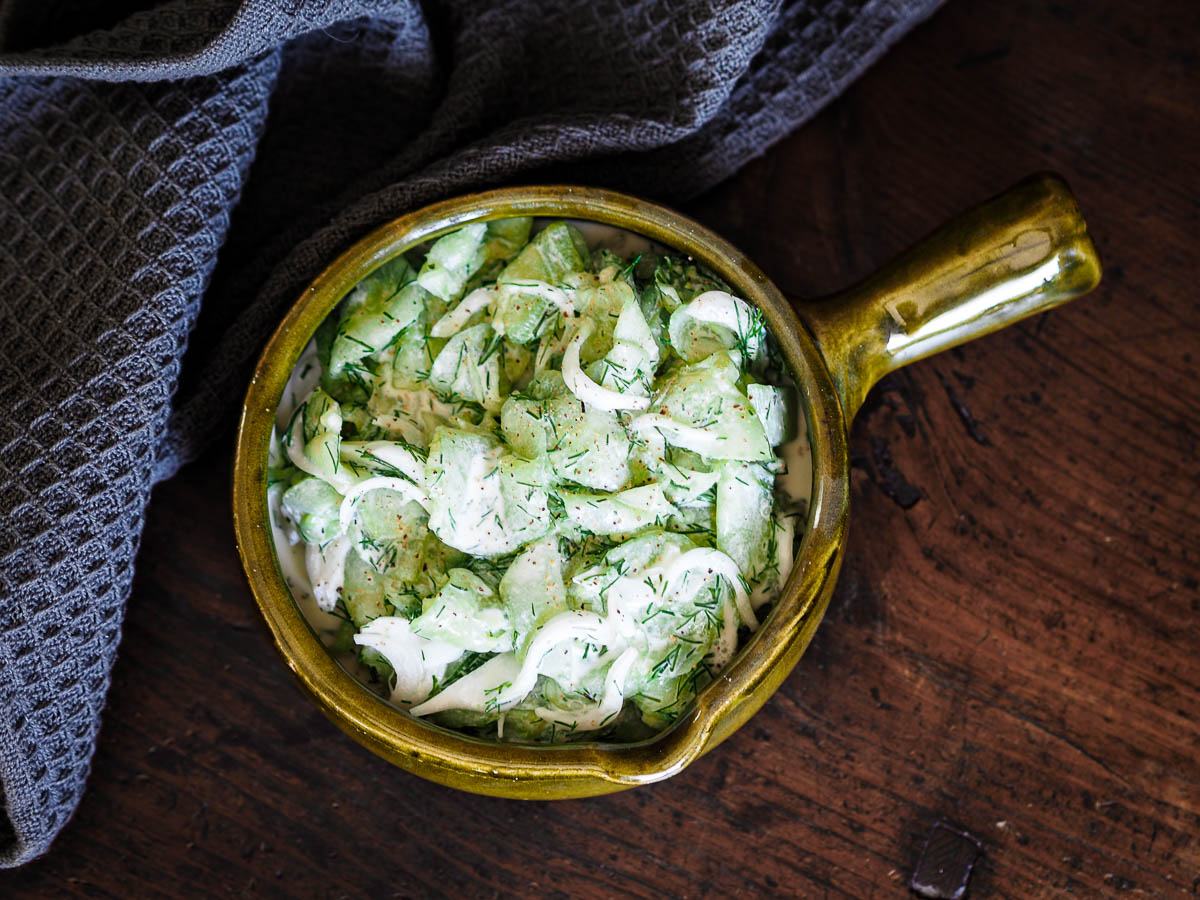
An ultra classic but refreshing and delicious raw vegetable salad, to be consumed without moderation. With dill (or chives) for seasoning.
During SIA 2022, the International Agricultural Show, I cooked delicious cucumber appetizers live on the Village Semence set for SEMAE, the inter-professional association for seeds and plants. These appetizers were beautifully presented since I had made rolls with strips of cucumber cut with a peeler and garnished with a cream cheese cream with smoked salmon and diced pan-fried cucumber. You will of course find the recipe on the blog as well as a video tutorial, and the replay of the show.
If I come back to this show it’s because I listened while I was cooking and listened to the interviews. I learned quite a bit about cucumber cultivation in France, with the presenter Philippe Lefebvre and Valéry Goy, a cucumber producer who has a farm in Gard, near Aigues-Mortes. He is associated with the Les paysans de Rougeline cooperative. I have already told you about the Paysans de Rougeline and their Zero pesticide residue label following my visit to one of their tomato farms, you can read more in this article. I suggest you watch the replay of the show on the Village semence set if you want, but in essence, here is some information on growing and consuming cucumbers.

Cucumber cultivation has a short cycle which allows several harvests per year, on average 2 to 3 rotations over a season which extends from March to the end of October. Production is mainly done in greenhouses because the plant is very fragile. It is sensitive to the vagaries of the weather: wind and excess rain for example. The plant must not move too much otherwise the cucumbers will be marked which will affect the quality and conservation.
Zero pesticide residues: Current agricultural techniques guarantee the absence of pesticide residues. It is a work in harmony between cucumber plants and insects. Third-party insects are introduced onto the farm. They devour harmful insects that damage plants. This avoids treatments. On the other hand, against fungi or diseases, we use mushrooms which stimulate the defense mechanisms of plants, once again avoiding the use of chemicals.
In France, there is an association of tomato and cucumber producers that promotes cucumbers. The industry is currently working on packaging cucumbers to avoid the use of plastic film. This individual packaging still makes it possible to improve the shelf life and avoids cross-contamination in contact with another unhealthy food, carrying germs or treated with fertilizers.
The French consume on average 2 kilos of cucumbers per year per person, or 4 or 5 cucumbers each. With us we are well beyond that! And you ? This consumption is rather on the rise. Also note that the cucumber is a fruit, which is considered, like the tomato, as a vegetable.
Cucumber cultivation follows trends and developments in current consumption habits, with smaller, more digestible and less bitter varieties. We now often see cucumber portions of around 100 grams on the stalls. Cucumber is considered a health food, with an endless variety of simple and inventive recipes combining crunch and freshness: smoothie, gazpacho with mint, fresh cheese, etc.
So you are going to tell me that I am talking to you about healthy eating and I am offering you a recipe with crème fraîche. You can either choose a version with 30% fat cream. Or use a light cream or fromage blanc. What we are looking for is the creamy side of dairy.
Cucumbers are naturally made up of a lot of water. Two reasons to disgorge it and remove part of its water from its flesh: to prevent water from coming out into the dish and soggy the sauce, to make it crunchier. Some say it makes it more digestible, I’m not sure. The cucumber producer we met at the SIA explained to us that with the new varieties of small cucumbers, it was not necessary to disgorge. I recommend it if you are taking cucumbers that are not ultra fresh and firm.
To drain the cucumber, cut it into thin slices, place them in a colander or a bowl with coarse salt. The amount is approximately 1 level tablespoon per cucumber. Mix well and leave for 1 hour. After an hour, rinse thoroughly and dry your cucumber slices well in a clean cloth or with absorbent paper.
If you do not want to bleed with salt, place the cucumber cut into the size of your choice on absorbent paper and tap well to remove a little water without using salt.
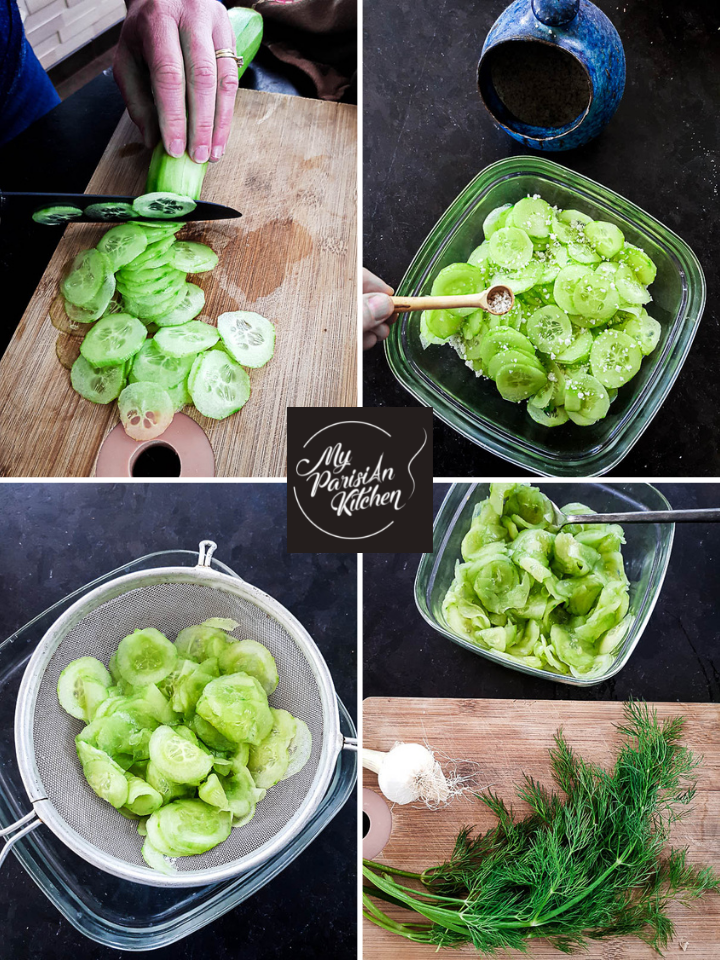
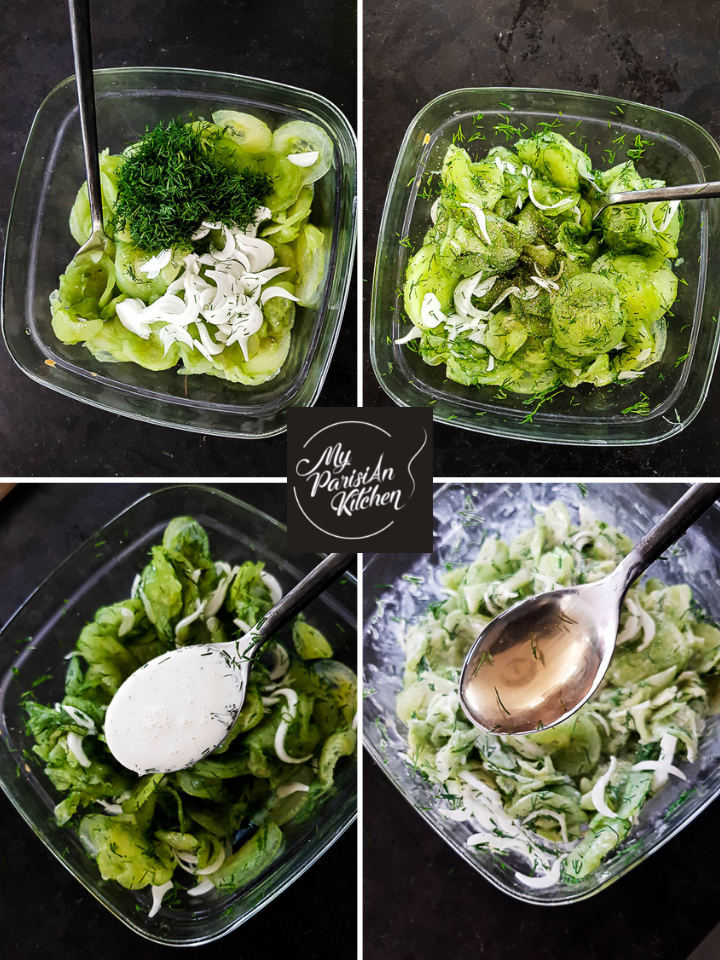
Here I use thick crème fraîche with 30% fat but you can use light cream. Or replace with cottage cheese or Greek yogurt. Either the whole quantity or make half cream – half yogurt. The heavy cream makes the salad dressing creamy and smooth. I’m under pressure, that’s how my mother-in-law makes it and my husband loves her recipe!
Again, as a family recipe, it’s dill in our house. But you can choose the aromatic herb that you like the most or that you have available: chives, mint, fresh thyme…
To strengthen the seasoning a little, you can add a chopped shallot, 1 teaspoon of mustard, a drizzle of lemon juice or cider vinegar (or cream of balsamic vinegar). I sometimes like a drizzle of good olive oil. It’s up to you to have fun with the variations.
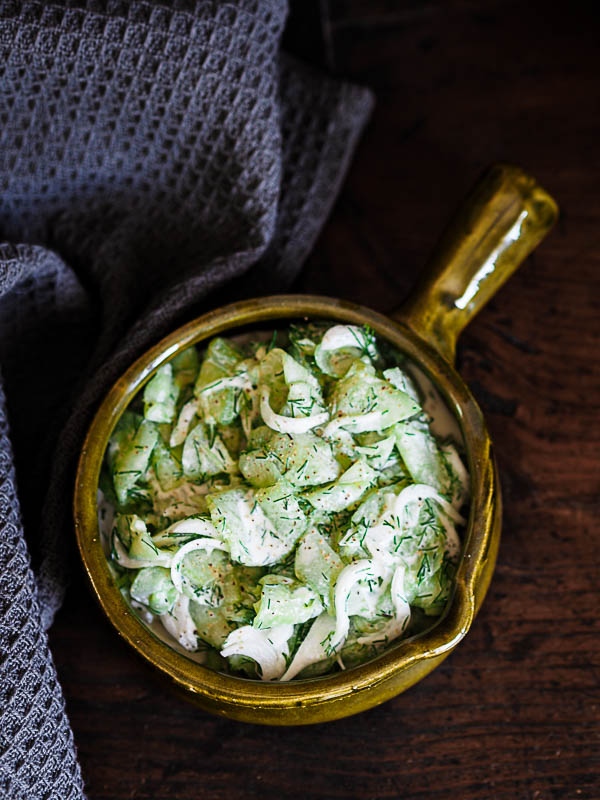
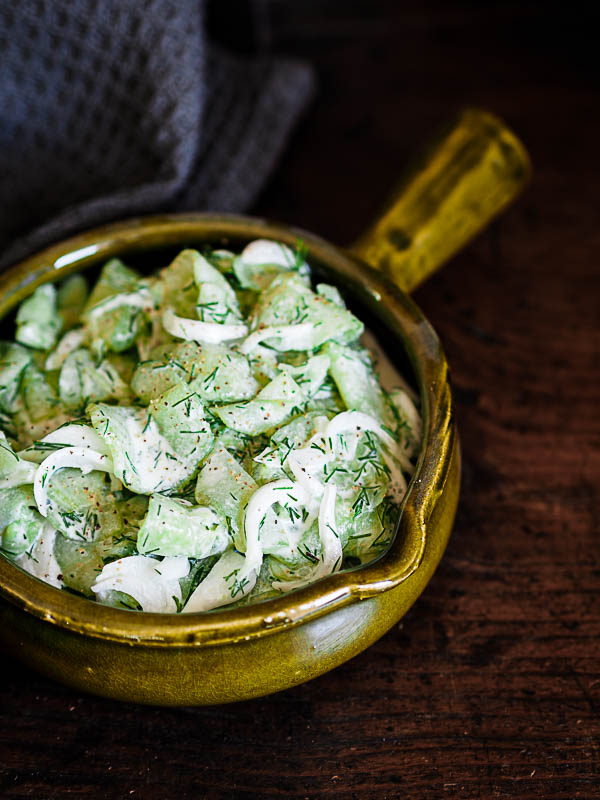
An ultra classic but refreshing and delicious raw vegetable salad, to be consumed without moderation. With dill (or chives) for seasoning.
To prevent sleep
Refer to the description before the recipe to see the seasoning variations: dill, mustard, lemon, drizzle of vinegar or olive oil (as in the step-by-step photo here).
This is a partner post, sponsored by the SEMAE inter-professional association.
Enjoy