Physical Address
304 North Cardinal St.
Dorchester Center, MA 02124
Physical Address
304 North Cardinal St.
Dorchester Center, MA 02124

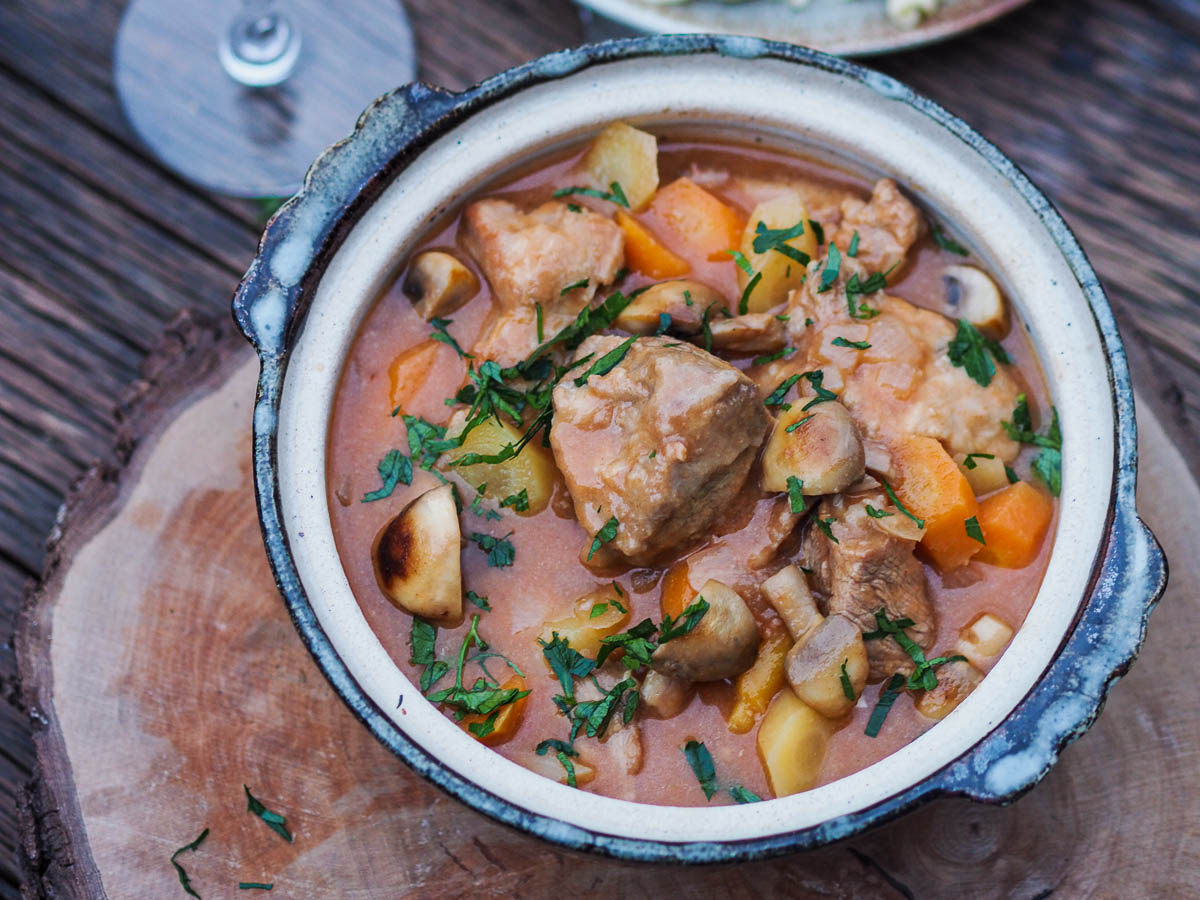
A great classic of slow-cooked dishes in French cuisine, this sauce dish is ultra gourmet with its tender meat, tomato sauce and small vegetables. Easy and tasty.
I also share with you the origin and the astonishing history of this dish, linked to Napoleon…. or not!

The most commonly told story is that this dish would have been invented by Napoleon Bonaparte’s cook on the battlefield of Marengo in the Piedmont region of northern Italy June 14, 1800. Napoleon is hungry and asks to be served quickly. Napoleon was not a great gourmet and ate when he was finished or when he had time. He often ate alone, very quickly sometimes standing up.
Brief, his cook prepares a dish with the means at hand : chicken, tomato… but it needs to cook quicklyt then instead of roasting or boiling the chicken as was customary at the time he cuts the chicken raw and seizes it then cooks it with the ingredients he finds on site. Napoleon would have loved this dish and requested that it be served to him after each battle.
But this story is probably just a legend because historians do not confirm it. And the cook Dunan only entered Napoleon’s service after the battle of Marengo, in 1802.
The initial recipe for Marengo veal is therefore with chicken, And would undoubtedly be a suitable Piedmontese recipe and brought back to France. Chicken was subsequently replaced by finer cuts of meat, such as veal.
The name “Marengo” was applied to various dishes very early. The recipe book Royal cook proposed in 1820 “Marengo-style” recipes for dishes with rabbit, sweetbreads or chicken.
The recipe spreads and is standardized around the key ingredients of tomatoes and white wine in bourgeois cuisine between 1860 and 1900.


For the calf, ideally choose the shoulder. Shank, walnuts, undernuts can also do the trick. If you buy the cuts indicated low ribs in the supermarket for blanquette or sautéed veal on trays may be suitable.
Ask your butcher to prepare the pieces or do it yourself: trim them (remove the fat) and cut large cubes of around 50 g each.
Variation therefore with chicken. This recipe is here with veal as traditionally but can also be prepared with chicken, whether thighs or even breasts. The cooking time will then have to be adapted because it will be shorter. In this case you may need to precook the carrots too.
Here onion, garlic, carrot and button mushrooms.
We can also add pearl onions, it’s quite nice. In this case, ideally pre-cook them. Either just by frying them or by what we call brown glaze: put the pearl onions in a saucepan with 20 g of butter and 10 g of sugar, cover with water then cover with baking paper. Cook at a low simmer until tender.
You will see, there are several steps but it’s quite simple. We color the pieces of meat, we remove it then we brown the onion and garlic and we deglaze with white wine. We put the meat back, mix it with flour (I’ll explain this to you right after) and add tomato paste (or canned crushed tomatoes) and chicken stock (or veal stock) with carrots and bouquet garni, then let it simmer over low heat for 1 hour to 1 hour 30 minutes. Before the end of cooking, add pan-fried button mushrooms.
This technique consists of sprinkle flour on meat in a pan or casserole dish where you have used a fatty substance (oil and/or butter) before adding a liquid in which your ingredient will simmer (this can be broth, wine, beer, tomato sauce, etc.).
This has a double effect: thicken the sauce for your dish while creating a golden and crispy crust for your meat which will help keep the meat soft. We thus obtain a linked sauceas is the case for beef bourguignon, osso buco, Flemish carbonade, stews…
What connection with the animal? The Taste Academy website tells us that this comes from an ancient culinary habit. Cooks used to imitate the browning obtained by cooking food in fat using a liquid caramel called “monkey juice”. This made it possible to color the meat and make the sauce, mimicking, imitating the color that would have been obtained by browning the meat. This practice no longer takes place but the term singer has remained.
Serve the veal marengo with steamed potatoes or as in the photos, pasta. As it is a dish with sauce, I find that rice or creamy polenta is more suitable.


Marengo veal, a great classic of simmered dishes with its tomato sauce, easy and tasty.
To prevent sleep
In the article that precedes the recipe, discover its astonishing history linked to Napoleon, an explanation of the culinary term singer and a variation with chicken.


Enjoy