Physical Address
304 North Cardinal St.
Dorchester Center, MA 02124
Physical Address
304 North Cardinal St.
Dorchester Center, MA 02124

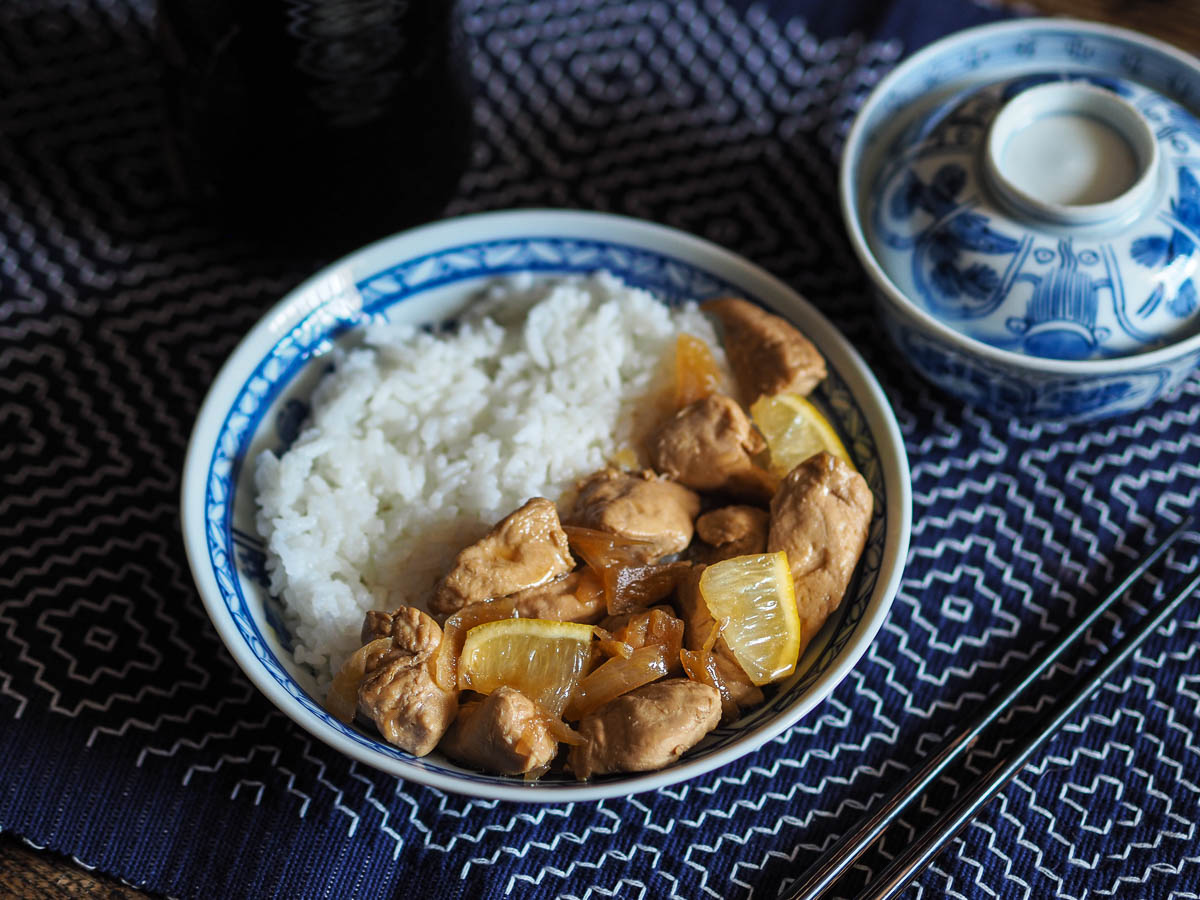
Chicken with a soy and lemon sauce, and a touch of sugar for a very delicious balance. Serve with rice. I brought this recipe from Japan.
I am not offering you a soy and lemon marinade here but a prepared sauce dish that is very easy and quick to prepare, very comforting with Asian accents.
This is not a traditional Japanese recipe like you will find in Japanese cooking recipe books, nor is it a dish you would eat in classic Japanese restaurants. But it is a dish I brought back from Japan where I lived many years ago.
It was a Japanese friend of my mother who told us about it.. What’s funny is that while we found it to have a very Japanese air, this Japanese woman found that this recipe had a modern and Western air, for her an adaptation of a Japanese dish to international cuisine.
At any rate the soy sauce and lemon juice mixture works wonderfullyit is therefore a basic recipe of my family for decades that I am giving you here.
Here we use Japanese salty soy sauce. You can easily find them in supermarkets or Japanese grocery stores. I buy for my part for the kitchen Kikkoman sauce in a 1 liter bottle in the Japanese shops on rue Sainte Anne or in the small Japanese store Kanae on rue Lecourbe near my office in the 15th.
Kikkoman and also Yamasa are brands that can be found everywhere in Japan. Note that Japanese soy sauce is a little less salty than Chinese but contains a little gluten.
There is sweet soy sauce. If you only use this for this recipe, your dish will really have a very marked sweet-salty air and will be a little too sweet for my taste..
However, you can mix sweet soy sauce and salty soy sauce. Then reduce or completely eliminate sugar which is present in the list of ingredients. My recommendation, however, remains on the use of classic soy sauce.

Originally from China, soy sauces are present in the cuisine of many Asian countries, different depending on the country. Here are the particularities of Japanese soy sauce.
The ingredient list for Japanese soy sauce consists of only four pure items: soybeans, wheat, water and salt. Be careful for the intolerant, most Japanese soy sauces therefore contain glutenin minimal quantities but still (the addition of wheat is a specificity of Japanese soy sauce).
Salt plays an essential role in the fermentation process. There are now reduced-salt versions of soy sauces, where some of the salt is removed after fermentation. Salt also serves as a preservative, so there is no need to store your soy sauce in the refrigerator. However, it can oxidize a bit and therefore darken.
This sauce undergoes a all-natural fermentation processwithout the addition of preservatives, artificial colors or flavor enhancers.
The fermentation process driven by micro-organisms means that making soy sauce takes six months to three years.
Please note there are soy sauces which are not fermented but undergo a chemical hydrolysis process. It’s cheaper, faster… and worse. This practice is, from what I understand, prohibited in Japan.
The most commonly used Japanese soy sauce is dark soy sauce called koikuchi (濃口). It is generally pasteurized (it exists in unpasteurized form, nama-shōyu).
It has a transparent amber-brown color, giving off a pleasantly spicy scent. Its taste is deep, round in the mouth, rich in aromas and harmonious. Its texture is slightly pearly.
What makes soy sauce very versatile in its possible uses and the fact that it has the five tastes of sweet, salty, bitter, sour and umami. Soy sauce contains high amounts of free glutamic acid, which is the source of the umami taste.
There are also in Japan white soy sauce (shiro shōyu) and light soy sauce called usu-kuchi shōyu. Sweet soy sauce as we find it here, it is not really Japanese but more of a product intended for export! In the south of Japan, in the Kyushu region, there is a so-called “sweet” soy sauce ( amakuchi shōyu, the two characters say it: ama = soft and kuchi = mouth).
Finally, there is also in Japan the Saishikomi sauce (infused twice) and the tamari (which has a stronger taste and more pronounced umami. From longer fermentation, it does not contain wheat).
I stop there and advise you to read the very detailed article on the umami information site.
Squeeze 2/3 of the lemons and leave the others in quarters or slices. In this case, be sure to choose organic lemons.
You can of course only add juice. The wedges are mainly there for the aesthetic side of the dish, or opt for lemon juice already squeezed from the bottle.
The quantity of lemon juice may seem large to you, but the acidity of the lemon is well balanced by the soy sauce. Here I give you the balance that suits us but if you like it more lemony or more Asian, adapt the quantities of soy sauce and lemon.
Here we simply use chicken breasts cut into pieces. I could have called this recipe minced chicken.
The recipe can be made with whole chicken thighs; it will then have to cook longer. But the idea here is to have meat in sauce to serve with rice, easy to eat with well-flavored bites, a bit like kare-raisu, Japanese curry rice for those who know.
The sugar softens the acidity of the lemon a little and gives a very syrupy sauce..
You can use a mix of soy sauce and sweet soy sauce, then you won’t need any sugar (see the soy section above). I tested this recipe without sugar, it’s also good but more lively!
You can possibly replace the sugar with crumbL.
It’s optional, my mother uses it, I don’t. This makes the sauce thicker and rounder.
Remarks : do not saltsoy sauce is already salty enough. During cooking, taste the sauce and depending on your taste, add more lemon juice or more soy sauce.


Japanese chicken recipe with soy and lemon sauce, and a touch of sugar for a very delicious balance. Serve with rice. I brought this recipe from Japan.
To prevent sleep
Serve with rice.
Do not add salt when cooking, soy is already quite salty.
See the article for information on the ingredients and the Japanese soy sauce used.
If you are a fan of soy sauce, it is perfect as a marinade for meat. I make a soy, lemon, honey marinade for a barbecue filet mignon recipe but it would go perfectly with chicken thighs marinated a la plancha, pork ribs or chicken skewers marinated on the barbecue.
Enjoy