Physical Address
304 North Cardinal St.
Dorchester Center, MA 02124
Physical Address
304 North Cardinal St.
Dorchester Center, MA 02124

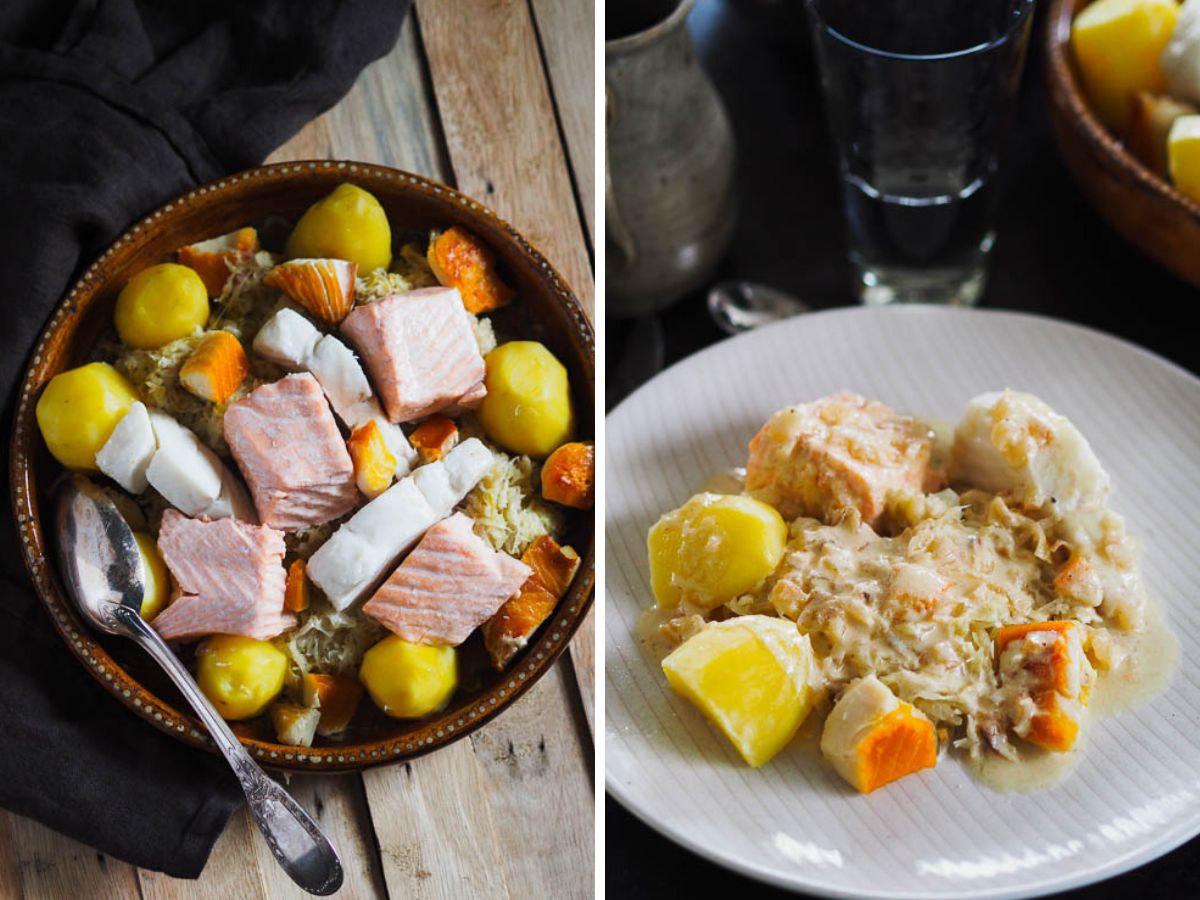
A sea sauerkraut with three fish (haddock, salmon, cod) with an ultra-delicious sauce that is much lighter than white butter. Adaptation of the recipe from Alsatian Chef Baumann, its inventor.
It is chef Guy-Pierre Baumann Who invented this recipe in 1972more than 50 years ago.
This Alsatian who runs several breweries in Paris notes that he sometimes has difficulty selling the emblematic Alsatian dish that he always has on the menu, traditional sauerkraut. Indeed when it’s too hot, customers don’t order garnished sauerkraut.
Pioneer in the fight against junk food in the 70s and advocate of more healthy cuisine even in traditional dishes, he then decided to revisit the recipe and lighten it by removing the meat and cold meats and replace them with three well-chosen and harmonious fish: one white fish, halibut, salmon and smoked haddock to recall the smoky taste of the sausage of the traditional dish.
He serves this sauerkraut with a little buttery sauce which gives a little pep and deliciousness to the whole.
Beyond fish sauerkraut, he proposed other adaptations, democratizing sauerkraut in Paris.
Guy-Pierre Baumann takes over the management of the Alsatian Kammerzell house at the foot of the cathedral in Strasbourg in 1987. Thanks to this recipe for sauerkraut with three fish, he made this establishment famous.
Arrived in Paris at 18 with CAP in hand, became emblematic ambassador of Alsatian gastronomywith several Alsatian establishments, it is a bit one of the pioneers of chefs who approach catering as a businessman with multiple large breweries.
He remained the owner of the Kammerzell house until 2009. He died in September 2022, at the age of 82, his signature dish is still served in the establishment.

It can be found on the website of Maison Kammerzell, invented by chef Guy-Pierre Baumann.
Ingredients for 4 people:
Sauerkraut: 1.2 kg of sauerkraut, 3 small onions, 3 cloves of garlic, 10 g of juniper berries, 5 g of cumin, 1/2 bay leaf, 1 sprig of thyme, 2 to 3 pinches of coarse salt, 5 to 6 turns of the pepper mill, 20 cl of dry white wine (Riesling, Sylvaner or white Sancerre), 1 glass of water, 70 g of fat goose.
The fish: 400g of smoked haddock fillets, 400g of salmon fillets, 400g of halibut, 300g of mussels.
The sauce: 400g of butter, 4 chopped shallots, 15cl of spirit vinegar, 10cl of white wine, 15cl of crème fraîche
The chef’s instructions :

I use already cooked sauerkraut, the one that delicatessens sell for classic meat sauerkraut. It works really well and makes this dish so easy and quick to prepare!
But if you feel like it, then follow his recipe, I don’t have anything better to suggest!
So I use cooked sauerkraut with 2 onions that I previously browned in butter or when I have duck fat. Sometimes with some smoked bacon.
I reheat the sauerkraut with these pan-fried onions by adding a little water and possibly a little dry white wine.
I add potatoes. I make them cook peeled in steam or salted water. Once cooked, I add them to my casserole dish on top of the sauerkraut.
I leave on the heat or leave at medium temperature in the covered oven, at around 70 to 90°C.
For fish I use salmon, smoked haddock and cod instead of halibut. No mussels.
For cooking:

For the sauce, Baumann’s recipe is a kind of white butter with butter, a lot of butter, really a lot! 400g for 4 people makes 100g per person! And extra crème fraîche.
For my part, I’m starting with a base of white butter without vinegar by doing brown the chopped shallots with white wine and add a large knob of butter.
When the liquid has reduced, I add the zest and juice of a lemon and some cream. I season with salt, pepper and a little Espelette pepper to lift it up a little. It’s optional because it’s not very Alsatian!
I mix and reserve until ready to serve. SO I add more butter and the haddock milk.
This makes a nice amount of sauce but since the sauerkraut, potatoes and fish are without juice or sauce, it’s good to have a nice, generous sauce.
Filter the sauce or not? And there it is the choice, either like me you serve the sauce as is, or you pass it through a strainer to keep only a creamy sauce and throw in the chopped shallots which have returned to the white wine and a little acidity. As Chef Baumann does in his traditional fish sauerkraut recipe, and as we do for an authentic white butter.
It’s a question of taste. I admit, as for my favorite lemon and cream sauce to serve with any type of fish, I don’t do it. Up to you!


A sea sauerkraut with three fish (haddock, salmon, cod) with an ultra-delicious sauce that is much lighter than white butter. Adaptation of the recipe from Alsatian Chef Baumann, its inventor.
To prevent sleep
Boil water with a little salt in a saucepan. Wash and peel the potatoes. Cook the potatoes. The time depends on the size. When they are cooked, drain them.
In a casserole dish, melt a large knob of butter or its equivalent in duck fat. Peel and thinly slice the two onions, fry them without coloring them for 10 minutes. When they have become translucent, add the sauerkraut, mix and add a little water. Possibly a little white wine. Leave on low heat to keep warm, cover.
Add the potatoes to the sauerkraut when they are cooked. Cover.
15 minutes before serving, cook the fish
The haddock: Heat over medium heat for 10 minutes. After 10 minutes, remove the pieces of haddock and place them in the casserole dish with the sauerkraut and potatoes. Add a little water if necessary, it must not dry out or stick. Save the milk that will be used in the sauce.
Salmon: Place the salmon steaks, skin side down, in a pan, close with a lid and cook over medium heat for 10 to 15 minutes depending on the heat. We cook them unilaterally but keeping the lid on will cook them thoroughly.
Cod: Cover the bottom of a pan with a cut-out circle of parchment paper. Place the pieces of cod, salt, pepper and add the knobs of butter. Cover and cook for 5 to 10 minutes depending on the thickness of your pieces.
In the article, I give you all the information on the original recipe revisited by chef Baumann and tell you the history of this dish as well as the difference between this recipe and the traditional recipe.
Enjoy