Physical Address
304 North Cardinal St.
Dorchester Center, MA 02124
Physical Address
304 North Cardinal St.
Dorchester Center, MA 02124

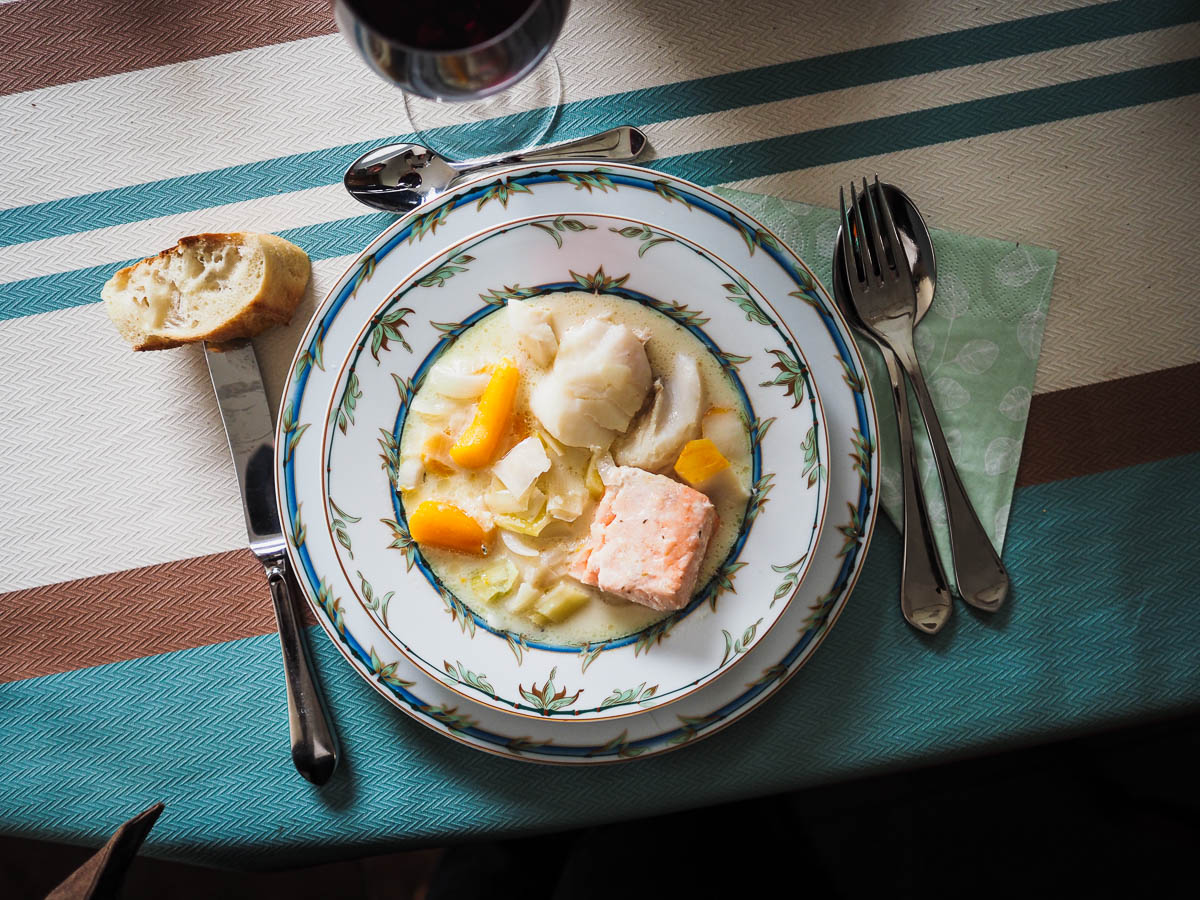
Ultra comforting traditional northern dish made with gently poached fish in a delicious, lightly creamed vegetable broth. Easy and very delicious.
With the comforting Flemish carbonade and the endives, sorry the chicory gratin, we are really here in typical dishes of the North.

This is a recipe not very far from the delicious sea sauerkraut that I offer you in another recipe on this blog. However, with a side of broth cooked in a very comforting casserole. It can of course be served as a main course but also be made into a complete soup by reducing the quantity of fish and increasing the vegetables and broth.
Traditional Belgian dishhe is also widely prepared throughout northern France. He is originally from Flandersthe first written mention of this dish dates from the Middle Ages.
The writing can vary, with one or two o: waterzoï or waterzooï. Waterzooi means “boiling water” in Dutch. If we dissect the etymology: water means “water” and zooi comes from the verb zoon which means “to boil” in Dutch.
It can be prepared with fish like here or with chicken. The version with chicken is more recent. The first waterzoï were made in the Ghent region with freshwater fish caught in the rivers and channels (bass, pike, barbel or eel). The catch of the day was at the time thrown into the usual broth, in boiling water, often garnished with local vegetables.
Whatever happens in both cases, the vegetable protein is cooked in a broth of local vegetables: potatoes, carrots, leeks or celery.
We cook the vegetables to make a broth. We cook the potatoes separately. We poach the fish in this broth. Then we add a mixture of crème fraîche and egg yolk.
For the option with smoked haddockwhile the dish is cooking, reheat it gently in a little milk. Add everything at the same time as the egg-cream mixture.
Choose a large saucepan or ideally cast iron casserole dish. It’s the surface that’s interesting. Because at the beginning we will brown the vegetables then cook them in water (or with vegetable broth), until they are soft and well cooked, but also until they delicately flavor the cooking liquid.
Afterwards, we will poach the fish in this broth, very slowly, without attacking them and maintaining the shape and appearance of the fish. So on medium heat, maximum at a simmer, and ideally the pieces of fish delicately placed next to each other in the broth, without overlapping. They will thus have uniform cooking.


Both are possible. If you simmer your vegetables well, in my opinion there is no need to enhance the flavors with vegetable stock. But you can speed up the cooking by opting for vegetable broth. No worries, it’s your choice.
On the other hand, I don’t really recommend basic stock cubes or fish stock. The advantage of this dish is that it highlights the different flavors of fish and vegetables. So it’s better not to cover your tracks.
These are local, local vegetables traditionally grown in the north, so potatoes, carrots, onions, leeks, celery…
Choose either water fish sweet as the origin of this dish (why not trout fillets?), or as I offer it to you here with a mixture of cod and salmon.
You can replace the cod with another white fish, whiting, haddock, sea bass or monkfish. Be careful if your fish is thin, it will cook much faster than the time indicated.
Anyway, use very fresh fishthat you are going poach gently in the broth (at medium heat or at a maximum simmer (not at a high boil as the name of this dish suggests as I explained to you above).


There too, both go. Traditionally, from what I have read, it is rather crème fraîche that is used. It is added at the end, before serving traditionally mixed with raw egg yolk, thus forming a very delicious connection, thickening the sauce. Added to the vegetable broth in which the fish is poached, it gives a subtle touch, remaining quite light, to this dish.
As every time you use smoked haddock, whether in a seafood sauerkraut, as a surprising ingredient in a quiche or as a topping for a vegetable soup, you will reheat the smoked haddock in milk. This flavors the dairy which will then add a sublime touch to your dish. This will also soften the fish while warming it.
If you want to stick with the traditional northern recipe, don’t use this smoked haddock that I’m offering you. But then increase the quantity of crème fraîche (150 gr or 200 gr) and add a second egg yolk.
You will have some egg whites left over after making this recipe. I suggest you recipes with leftover egg whitef to make a good omelette with chard leaves or a vegetable quiche by adding more egg white to the preparation. Or opt for a little pastry with meringues (have you ever thought about flavoring your meringues?) or coconut rocks, a great classic that always pleases.


Ultra comforting traditional northern dish made with gently poached fish in a delicious, lightly creamed vegetable broth. Easy and very delicious.
To prevent sleep
Please note the quantity of egg yolk and cream is what I recommend when preparing this dish with the smoked haddock and milk option. If you make this dish without the smoked haddock, I advise you to increase the quantity of crème fraîche (150 gr or 200 gr) and add a second egg yolk.
Enjoy