Physical Address
304 North Cardinal St.
Dorchester Center, MA 02124
Physical Address
304 North Cardinal St.
Dorchester Center, MA 02124

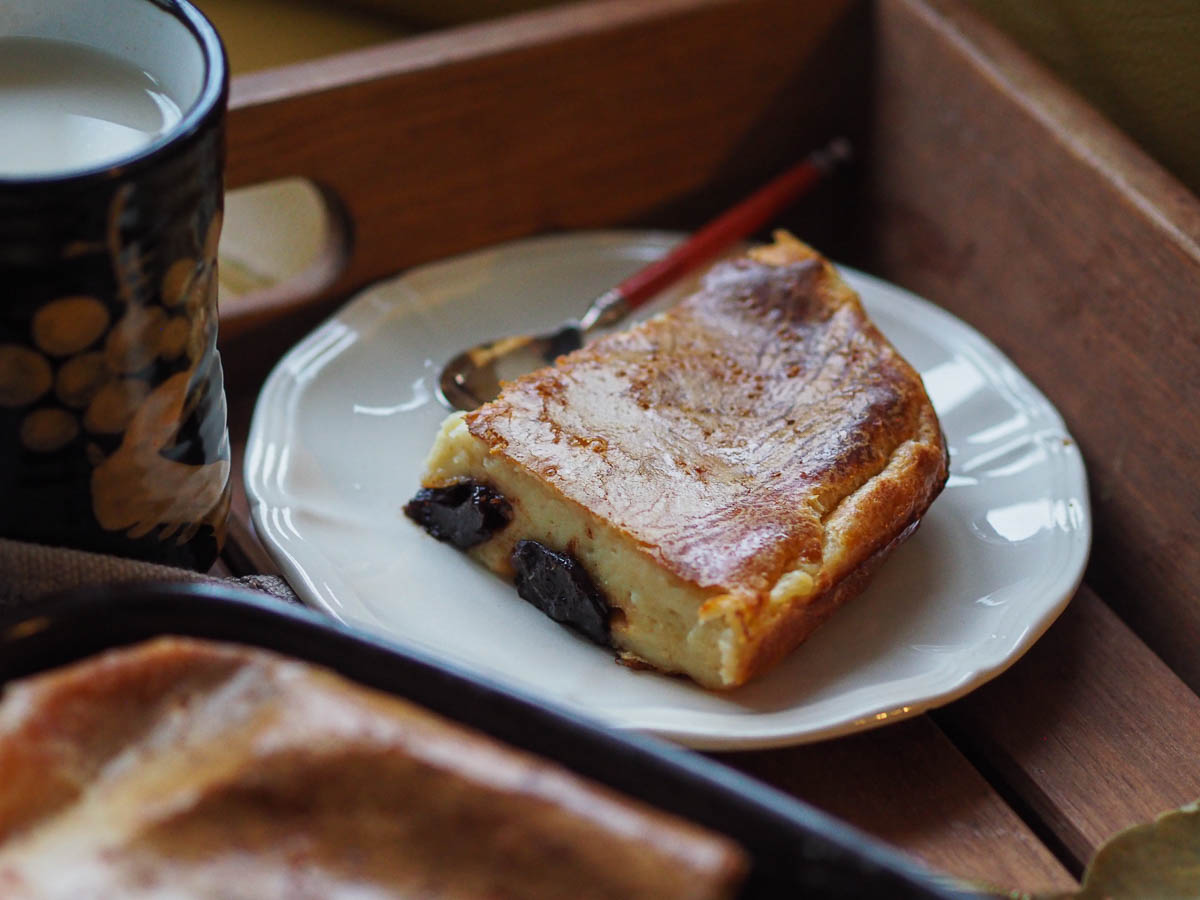
The true traditional recipe for Breton far with prunes, and my secrets for an ultra gourmet, creamy, golden far.
A classic recipe from the Breton cuisine repertoire always remains a pure pleasure. So no need to reinvent the old-fashioned recipe, I just reduced the quantity of sugar for a dessert that is tasty but not too sweet.
After all, there are already prunes that do the job! And what’s more, this express recipe is so easy to make.
The two secrets to the success of a very homogeneous Far Breton, dense while remaining creamy, with its golden brown top are:
And how to ensure that the prunes do not fall into the found? Everyone does their own thing: sprinkle the prunes with flour, let the mixture rest for ten minutes in a cool place before putting the flour in the oven or even soak the prunes in hot water…
I admit that I wonder if it’s not searing over a hot heat at the beginning that helps. Go figure…
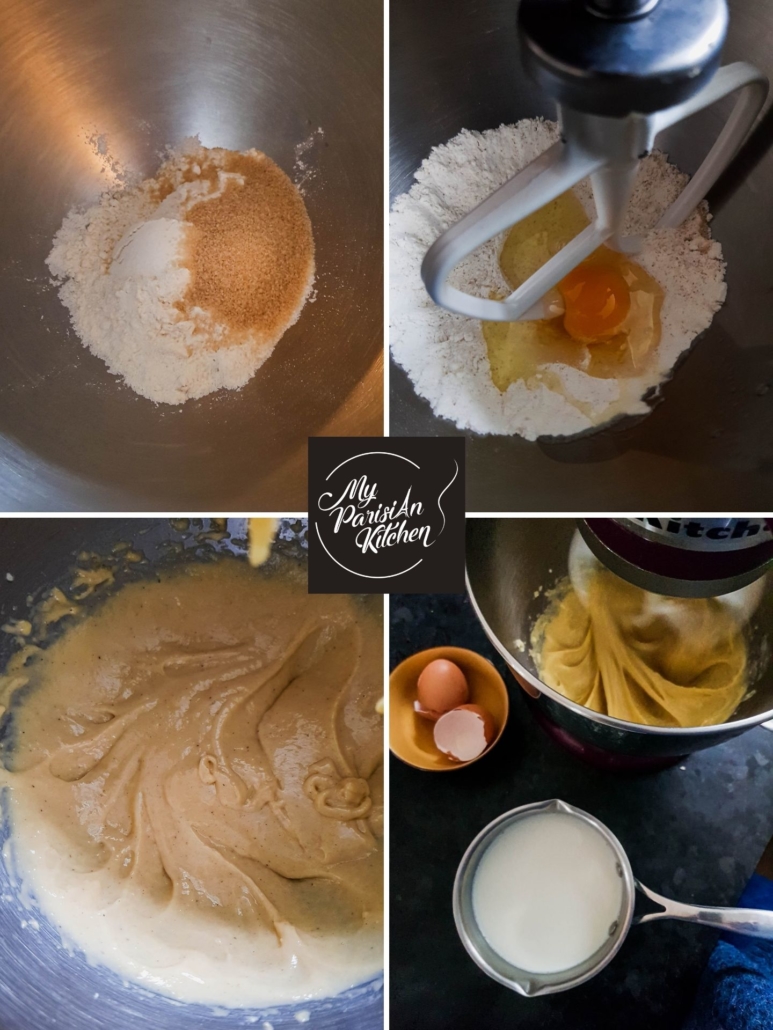
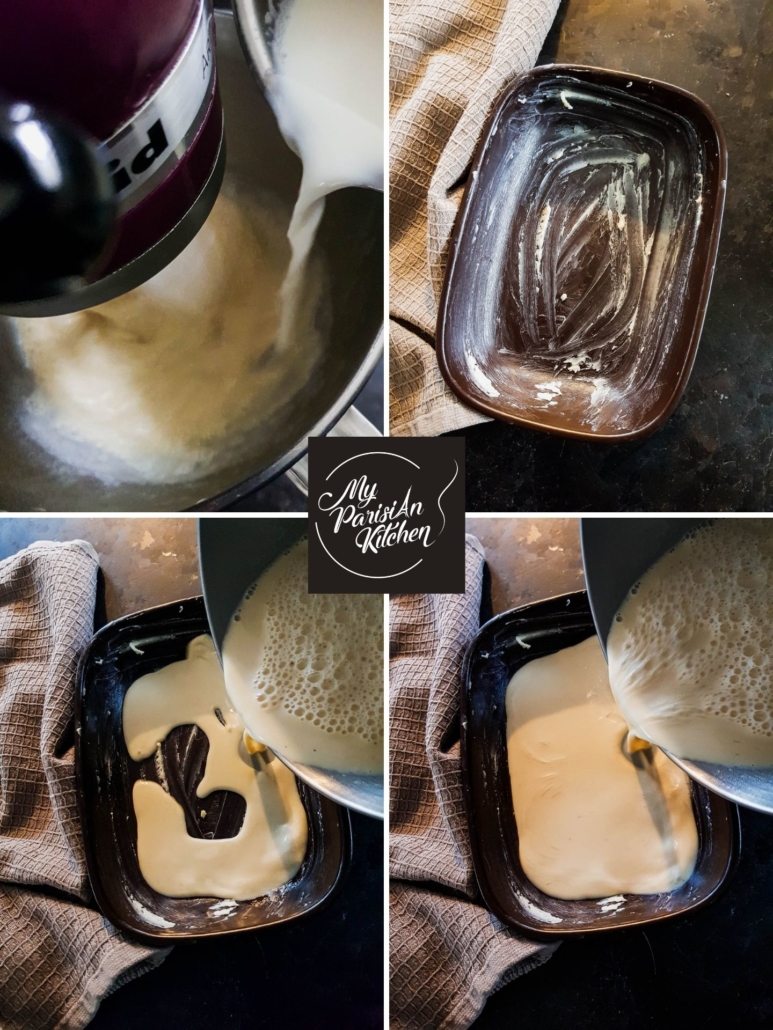
You must start cooking over a very high heat, I suggest in this recipe start at 210°C then after 10 minutes lower to the classic baking temperature for cakes, i.e. 180°C. for 45 minutes.
I know it may seem like a lot at first but that’s what gives it that texture and a nice golden appearance. This thing was entrusted to me by a Breton 🙂
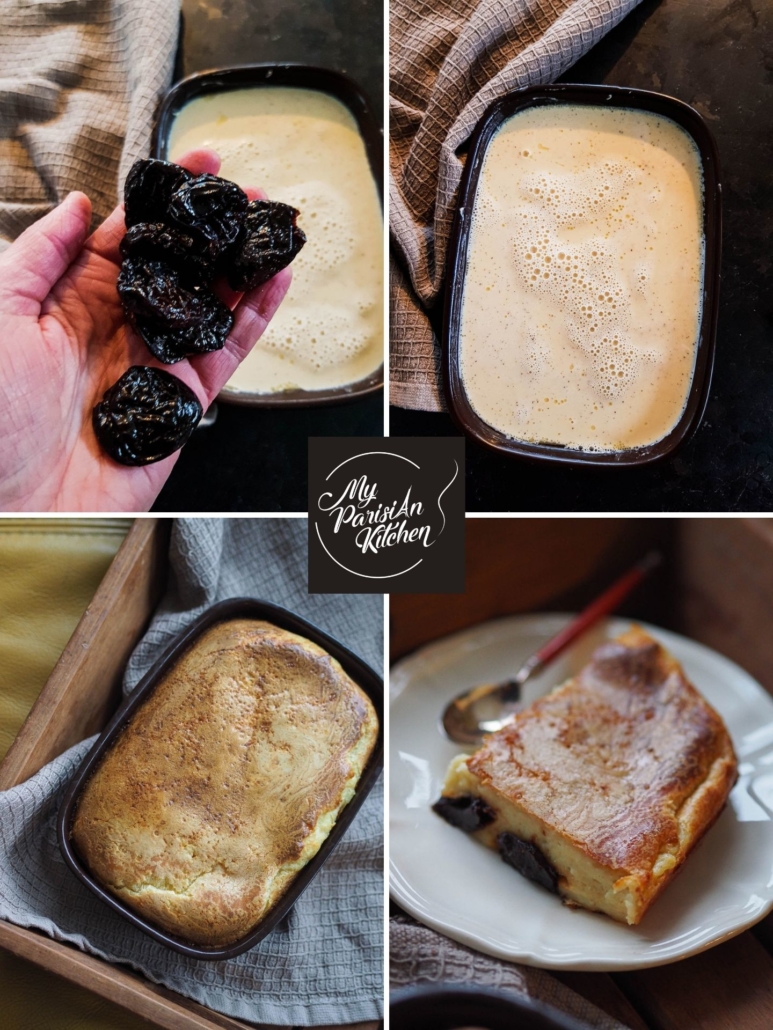
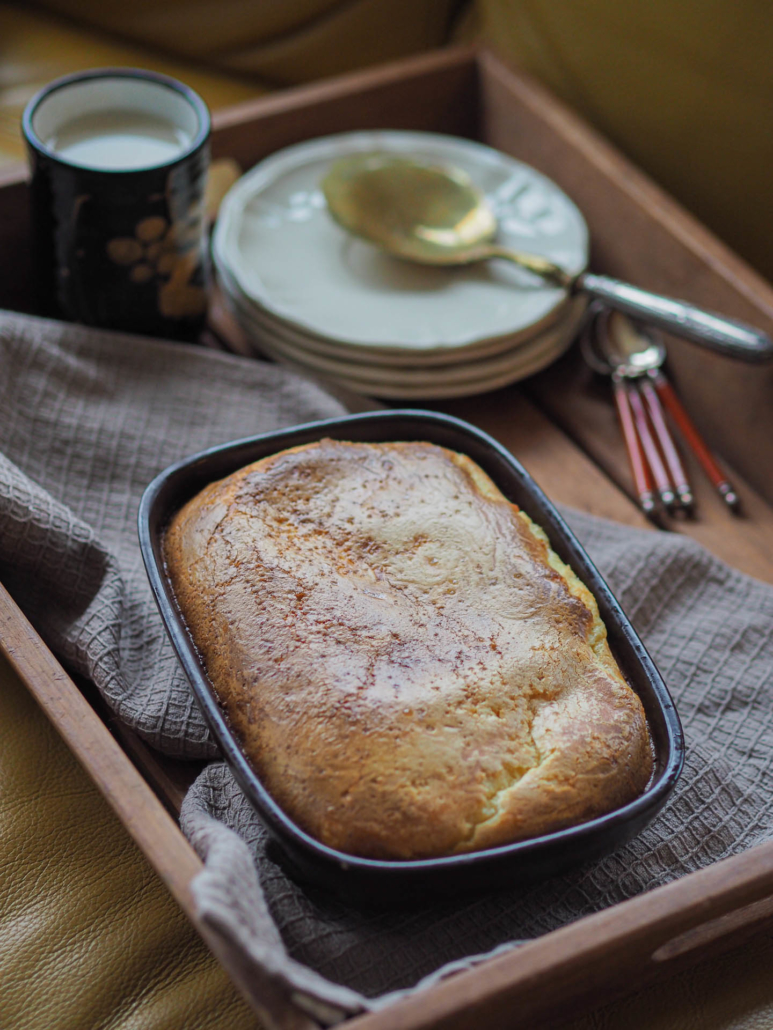
A Breton specialty par excellence, it was in the 18th century that the name far appeared for the first time in writings without really specifying what it was.
It a priori rather designates a stuffing for poultry cooked in a pot, therefore closer to today’s kig-ha-farz.
It is from 1850, in the Celtic-Breton dictionary of Le Gonidec that far refers to a “dough made of wheat or buckwheat that we put in a small canvas bag, to cook in a broth. We also make it in the oven, we put prunes or raisins”.
Far was therefore in the beginning often in a savory version, used somewhat as a substitute for bread.
A simple, healthy dish, it was prepared with the ingredients available on the farm: eggs, milk, flour, wheat or buckwheat. And often carried away by sailors.
Prunes bring a sweet and soft touch to the cakes but they were actually added to Breton fares for their caloric content.
As we have seen, Far Breton was a sort of travel cake for sailors. Adding prunes provided an interesting nutritional contribution (prunes are a particular source of minerals such as magnesium and have a significant caloric intake, 229kcal per 100g) or potassium and had the advantage of being available throughout the year.
I read that sailors traded them for fish during their journeys.
Raisins can replace prunes. Some say that true traditional Breton far is without prunes.
I admit that after reading an 80-page book entirely dedicated to far, I realize that there is not a single recipe but a multitude depending on the regions of Brittany, the families…
Coming to the blog is a variation using buckwheat flour.
We use far in French. It is written farz (far) or farz (far au four) in Breton. The word far could have several origins: from flour or farci according to Alain Rey in his historical dictionary of the French language, from Sanskrit bhar meaning food or from the Latin far which designates wheat, spelled, oatmeal or even a cake (the far piumsacred cake of Virgil).
THE flan is flourless and butterless, just a mixture of eggs and milk and/or cream.
THE pastry flan Or Parisian flan It contains butter and is cooked in a pie crust that is most often flaky.
The closest to the far would therefore be the clafoutis. The ingredient that differentiates it is the garnish which is not fresh fruit as in cherry clafoutis but dried fruit: prunes or grapes. A bit like a pancake batter filled and baked in the oven!
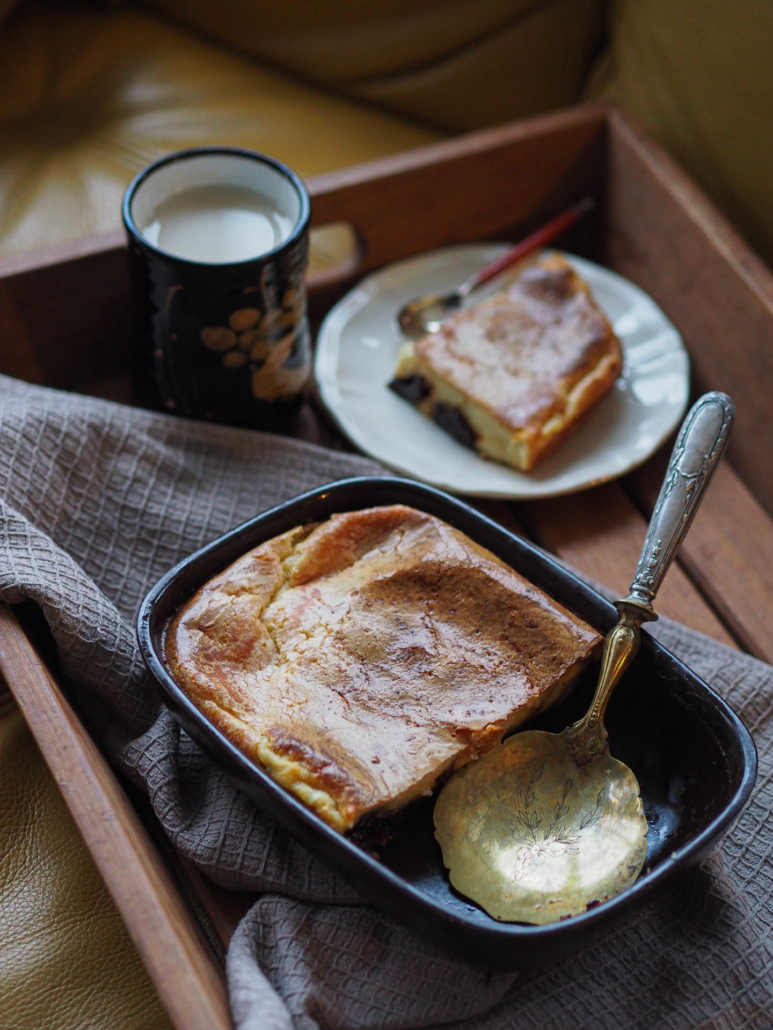
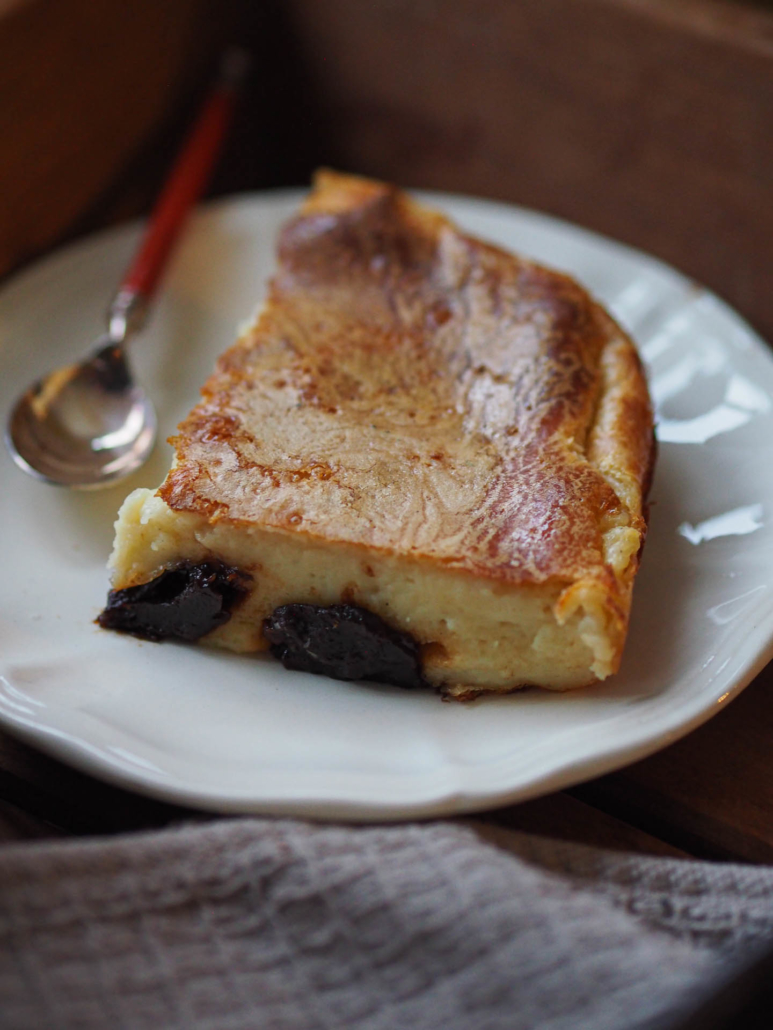
The true traditional Breton recipe, and my secrets for an ultra gourmet, creamy, golden brown fare.
To prevent sleep
Sources for the origin of Far Breton: various works on gastronomy and the book Fars bretons et Kig-ha-farz by Patrick Hervé, Collection bleue n°68 by Skol Vreizh.
Enjoy