Physical Address
304 North Cardinal St.
Dorchester Center, MA 02124
Physical Address
304 North Cardinal St.
Dorchester Center, MA 02124

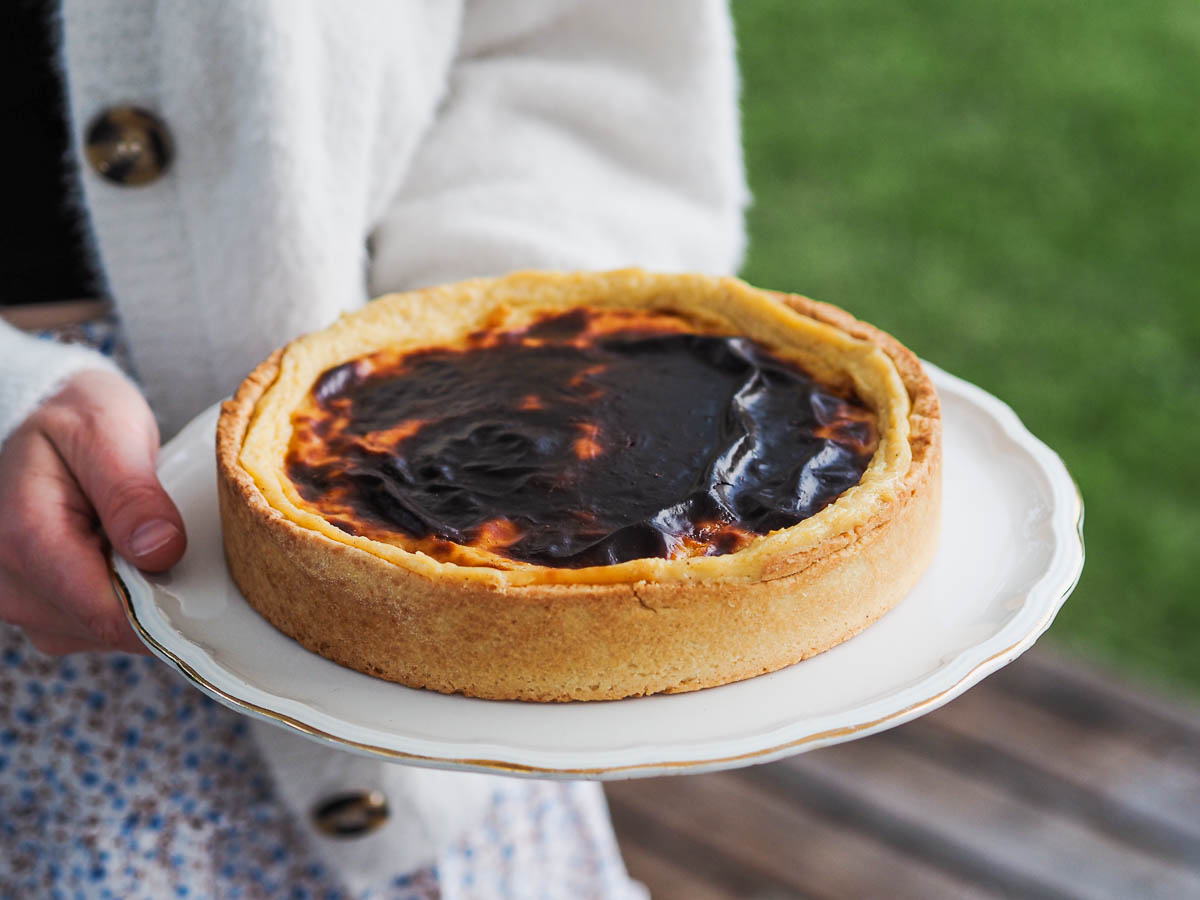
Parisian flan or pastry flan with a creamy, melting texture and an intense vanilla taste. There’s nothing like an old-fashioned dessert for pure indulgence.
Parisian flan is one of those desserts that you buy on impulse in a bakery because it is so popular on the shelves. Ultra comforting with its texture that is both firm and creamy, the supple and golden top, and all those vanilla beans that you discover when cutting. I’m cracking up!
But have you ever made a homemade flan? I admit it can be scary but ultimately it’s quite easy. I delved into the latest book 100% dedicated to flans by chef Ju Chamalo to give you all the advice for making the real Parisian flan recipe, which you can make into a pastry flan without dough. This recipe reminds me a bit of grandma’s old-fashioned way of making it (apart from the optional step of cooling the dough of course).
But before sharing the tips and tricks with you, a ritual on this blog when I tackle a traditional French cuisine recipe is to delve into the origin and history of this dessert.

The etymology of the word flan: Derivative from Latin flatothe old name of the flan in the Middle Ages East flask. It is then a question of crepes or pancakes sold by street vendors in the streets of Paris.
It was during the Renaissance that the word flan appeared. It is then a cheese tartclose to dariole or talmouse.
It’s little by little that the flan evolved into the flan we know today. It becomes a egg cream garnished with fruit, prunes, raisins or even savory ingredients like chicken livers or seafood.
A reference work on French cuisine, The Mesnagier of Paris of 1846 mentions “sweet flanks” and “flaons de cresme”.
The pastry flan is an egg cream or inverted with a dough. It is Antoine Carême in his book The Royal Parisian Pastry Chef of 1815 which mentions the Parisian flan for the first time.
But what he describes as Parisian flan is similar to pastry flan. So they are the same pastry. Parisian flan undoubtedly takes its name from the fact that it is the best-selling dessert in the capital’s bakeries.
The Academy of Taste tells us that pastry flan is without dough. And that as soon as a flan has a dough, it is a Parisian flan. As sources often contradict each other, I will continue my research.

Shortcrust pastry, shortcrust pastry, sweet pastry or puff pastryno missteps in terms of traditional recipe. It’s a question of taste, or time. This recipe generally uses shortcrust or puff pastry.
Puff pastry is quite common but takes longer to make, I personally admit that I often hesitate to try out homemade puff pastry. Isn’t it worth better a good homemade shortcrust or shortcrust pastry rather than store-bought puff pastry? No judgment here, do as you wish.
Start by making the pie crustspread it out and place it in your mold. Pour the dough into the mold is complete by positioning thehas dough on the edges which are quite high, either by putting at the bottom a circle of the diameter of your mold and a strip of 4 cm or the thickness of the rim all around. You will then have to gently weld the disc to the strip with your fingers.
Avoid this belt pressing technique for puff pastry which could be poorly sealed.
Once your pie crust is correctly placed in your mold, place it in the freezer while you prepare the flan maker.. This step is optional but gives a better result.


There are a lot of recipes quite similar to Parisian flan :
And a whole bunch ofadaptation of the flan, with or without dough And with perfumes other than the classic to make with a vanilla pastry cream for example, or even: chocolate, coffee, matcha…


Parisian flan or pastry flan with a creamy, melting texture and an intense vanilla taste. There’s nothing like an old-fashioned dessert for pure indulgence.
To prevent sleep
Sources: We’re going to taste. Recipe and advice inspired by Ju Chamalo in his book “Mes flans pâtissiers” published by Editions de la Martinière.
Enjoy