Physical Address
304 North Cardinal St.
Dorchester Center, MA 02124
Physical Address
304 North Cardinal St.
Dorchester Center, MA 02124

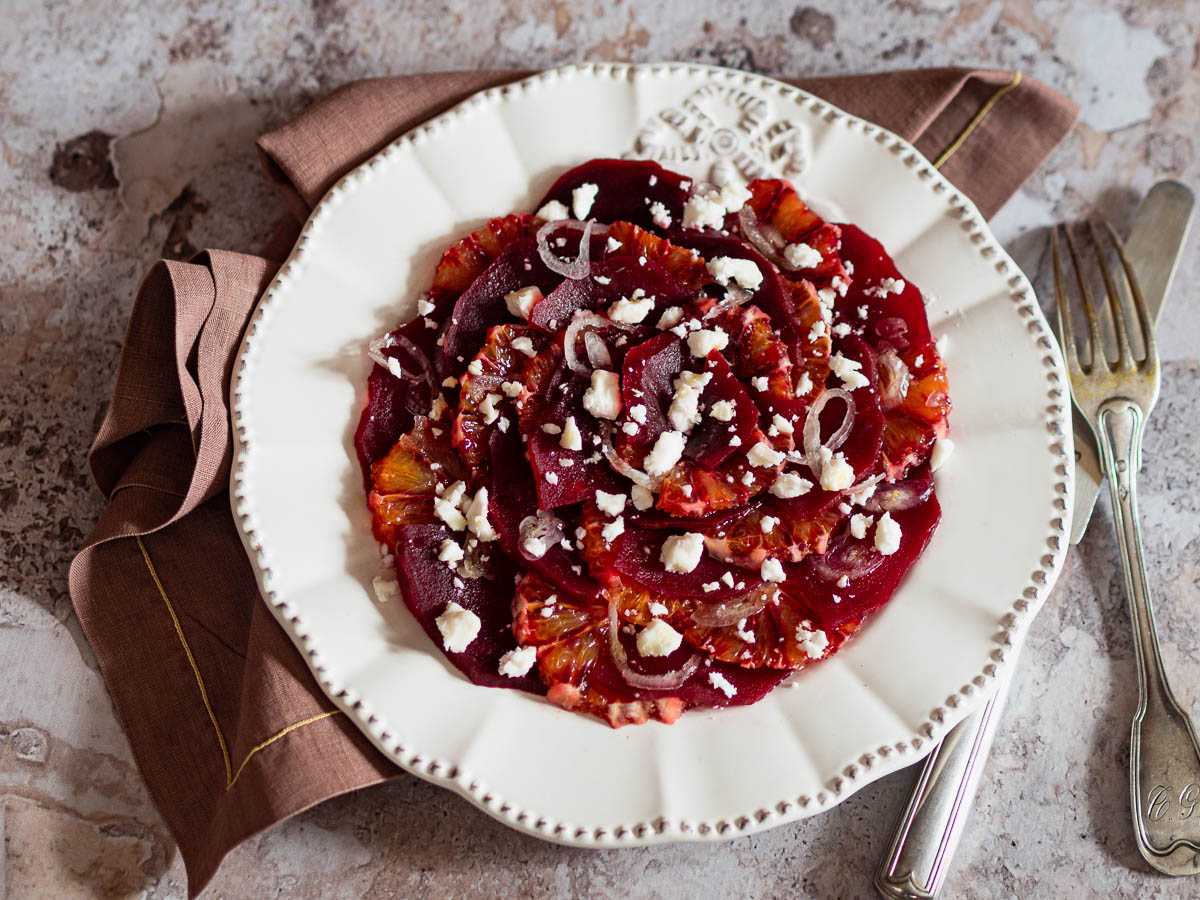
An ultra-vitaminized and colorful salad combining beetroot and orange. And to balance everything out, add feta and various toppings.
At the end of winter, I want a little color on the plate, don’t you? And above all, stock up on vitamins and good nutrients. Then this recipe is ideal.
It’s true that during the winter season which is always longer than we would like, we go around in circles on the fruits and vegetables that we can use in cooking if we want to stay faithful to the seasons and local sourcing. Cabbage, squash, leeks, carrots… It’s good in soup and roasted vegetables but not always easy to make mixed salads that tempt you with all that.
So I decided to add a little pep to your salads with this recipe. Because orange goes really well in mixed salads. After my fennel and orange salad with sliced shallots and raisins, I suggest you combine the cooked beetroot with orange, classic orange or blood orange.
The combination of beets and oranges in a salad offers a range of health-promoting nutrients. Beets provide fiber, vitamins and antioxidants, while oranges provide vitamin C, flavonoids and fiber too. I’ll tell you more later.
And add a little cheese, feta for example. And for the toppings, it’s up to you to have fun with crushed nuts, roasted hazelnuts, various seeds, chopped herbs…

Beets are rich in vitamins, nutrients and antioxidants, making them a great choice for a healthy diet. They are rich in fiber, vitamins C and B9, potassium, iron and manganese. Beets also contain nitrates which can help lower blood pressure and improve blood circulation.
Beets are also an excellent source of folic acid, which is essential for cell growth and development. Additionally, beets contain phytochemicals such as betalains, which have anti-inflammatory and antioxidant properties. The list is long. You will have understood that beetroot is very good for your health, but I will let you check all of this on websites specializing in nutrition.
For this salad, it is recommended to use red beets, which not only add color to the salad, but also a sweet, earthy flavor. I opt for cooked beets cut into slices or cubes. You can make a variation with coarsely grated raw beetroot.
The orange adds freshness and sweetness to the salad, as well as important nutrients such as vitamin C and antioxidants.
Oranges are rich in vitamin C, an antioxidant that helps protect cells from damage caused by free radicals. They are also rich in fiber, folate, thiamine, potassium and flavonoids.
Vitamin C found in oranges also helps strengthen the immune system and prevent diseases. Additionally, the flavonoids found in oranges have anti-inflammatory and antioxidant properties that may help reduce the risk of chronic diseases such as heart disease and cancer.
Oranges are also rich in dietary fiber, making them helpful in maintaining healthy digestion. Remember that it is always better to eat whole fruits rather than juiced to benefit from dietary fiber.
For this salad, you can opt for blood oranges, which not only add color, but also a slightly tart flavor.
Feta, the traditional Greek cheese par excellence, with its slightly fatty and grainy texture, and a fairly pronounced taste provides a real contrast with the first two ingredients. Feta is also a good source of protein and calcium which will complement the nutritional benefits of this recipe.
For this salad, I recommend using real Greek feta, which you will be able to recognize thanks to the PDO label. Real Greek feta is made from sheep’s milk or a mixture of sheep and goat’s milk. We find many sheep’s cheeses in our supermarkets that look like feta but are actually not.
Feta has an ancient history dating back over 2000 years. Its name, derived from the Greek for “cut”, appears in literature well before the 17th century but we find traces of a primitive form of feta mentioned in the Odyssey where it is said that Ulysses seized a cheese made by the cyclops Polyphemus while escaping from his cave.
Greek feta is known for its traditional production methods, adapted to the country’s mountainous and hot climate.
The production of feta uses only native sheep and goat’s milk, giving the cheese its white color and characteristic flavor. Sheep and goats feed on the country’s unique flora, which includes more than 6,000 different species of plants. Unique biodiversity!
A sheep produces approximately 1 liter of milk per day. To make 1 kg of cheese, you need between three and four liters of milk. After collection, the milk is heated to a temperature between 30 and 35°C. Then it ferments with rennet, which is made from the gastric juices from young sheep. No additives are introduced into the process. After the milk has coagulated, the curds are placed in molds with small holes for draining. The mussels are pressed to remove as much liquid as possible. Then its surface is salted to encourage the development of flavors. Refining takes place in two phases: first in premises controlled by temperature and humidity for approximately 15 days, then in constant refrigerated conditions for at least two months. It is at this stage that the feta develops its characteristic aromas.
The first step to making beet orange salad is to cook the beets. To do this, simply place the beets in a pot of boiling water and let them cook until tender. This can take anywhere from 30 minutes to an hour, depending on the size of the beets.
Once the beets are cooked, drain them and let them cool. Then you have to peel them and cut them into small cubes.
You can also steam them or in foil in the oven. You can of course also buy them pre-cooked from your market gardener or supermarket.
The second step in making beet orange salad is to peel the oranges. To do this, you must first cut both ends of the orange. Next, you need to make a shallow incision in the skin of the orange, starting from the top to the bottom.
Next, you have to peel the orange by removing the skin and the white membrane, following the curve of the orange with the knife. It is important to remove all the white membrane, as it can be bitter.
Once the oranges are peeled, cut them into thin slices or small pieces.


An ultra-vitaminized and colorful salad combining beetroot and orange. And to balance it all out, add feta, a vinaigrette with just a little olive oil and orange juice and various toppings.
To prevent sleep
Find out in the article how to peel oranges and how to cook beets.